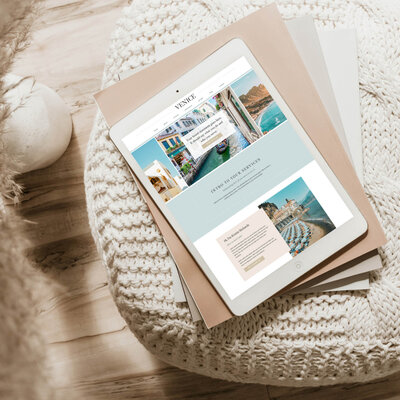


If you’re planning a new website, most of your questions fall into a few key areas: how customizable templates really are, what you need to provide, how the process works, and what it will cost. The short answer is this: modern template-based websites are highly flexible, the process is collaborative, and your biggest responsibility is providing clear messaging and timely feedback.
Let’s walk through the most common questions so you know exactly what to expect.
How customizable are website templates, really?
This is one of the biggest misconceptions in website design.
Templates are not restrictive. They are a starting point.
Here’s what can typically be customized:
- Colors and brand styling
- Fonts and typography
- All images
- All written content
- Page sections and layout (depending on the package or approach)
- Additional pages or sections
In a basic customization package, the structure of the template may stay the same while everything else is updated to match your brand. In a more advanced or semi-custom approach, layouts can be reworked entirely.
If you’re doing it yourself, you can technically change almost anything. Templates simply give you a strategic foundation so you’re not starting from scratch.
Will my website look like everyone else’s if we use a template?
Short answer: no.
Even if two businesses start with the same template, the final result will look different once branding is applied.
The biggest differentiators are:
- Your brand colors
- Your fonts
- Your imagery
These three elements alone dramatically change the look and feel of a site.
If you want to go further, layout customization can make your site even more unique. But in most cases, once your branding and images are in place, the template becomes almost unrecognizable from its original form.
What makes a website actually “convert”?
A converting website is not about design trends. It’s about clarity and strategy.
A high-converting website does three things well:
- Clearly communicates who you serve
- Shows the value of your services
- Guides visitors toward a specific action
Design supports this, but it does not replace it.
This is why your messaging matters so much. Without strong copy, even the best-designed website will struggle to convert.
How do photos work for a travel website?
Photos play a huge role in how your brand is perceived.
There are typically three sources for your website images:
1. Stock photos
These are often used as a foundation. When sourced strategically, they can look polished and cohesive.
2. Brand photos
If you have professional photos of yourself or your team, these should absolutely be included. They build trust and connection.
3. Supplier images (highly recommended for travel advisors)
These elevate your site instantly. They feel more authentic and aligned with real travel experiences compared to generic stock imagery.
A strong website usually blends all three.
If you’re working with a designer, they may handle sourcing images for you based on your brand and ideal client. This removes a lot of guesswork and ensures everything feels cohesive.
Can my website handle payments and contracts?
Technically, yes. But it usually shouldn’t.
For most travel advisors, your website should act as the front-facing marketing tool, not the system that manages your clients.
Instead, use a CRM platform to handle:
- Payments
- Contracts
- Client communication
- Booking workflows
Your website’s job is to attract and convert leads. Once someone inquires, your CRM takes over.
This creates a smoother, more professional experience on both sides.
What do I actually need to provide?
This is where many projects either move quickly or get delayed.
Here’s what you’ll need to bring to the table:
1. Website copy (most important)
All written content for your pages. You can write this yourself or hire a copywriter.
2. Images of you or your brand
Optional, but strongly recommended for trust and connection.
3. Logins and integrations
For things like your CRM, email platform, or booking tools.
4. Legal pages
Privacy policy and terms and conditions.
5. Blog content (if applicable)
Usually at least 1–3 posts to launch with.
6. Freebie or lead magnet (optional but recommended)
If you want to grow your email list, you’ll need to provide the content for your free offer.
Your involvement doesn’t stop at submitting assets. Timely feedback during the design process is just as important.
How long does the website process take?
A typical timeline looks like this:
- Template-based customization: 2 weeks
- More customized websites: 3-6 weeks
However, the biggest factor is not the designer. It’s you.
Projects move faster when:
- Feedback is given quickly
- Content is ready on time
- Decisions are made efficiently
Delays usually come from slow communication or missing content.
If you’re prepared and responsive, your site can launch much sooner than expected.
What does a website actually cost (beyond design)?
There are a few ongoing costs to be aware of:
1. Website hosting
Usually around $30/month depending on the platform.
2. Domain name
Typically paid yearly. A .com is ideal when available.
3. Optional tools
CRM systems, email marketing platforms, or premium integrations.
Your design investment is separate from these. You are paying for the strategy and build, while hosting and tools keep your website running.
Practical Takeaways
- Templates are flexible and highly customizable
- Your branding is what makes your website unique
- Strong copy matters more than design alone
- Your website should not manage your entire business backend
- Preparation and communication directly impact your timeline
If you’re exploring your next step:
- Learn more about our design process → Branding & Website SERVICES for Travel Advisors
- Browse ready-to-use designs →Travel Website Templates
- Read more strategy tips → If you use a website template, will it look like everyone elses?
FAQs
Is a template website professional enough for a travel advisor?
Yes, as long as it’s customized properly. A well-designed template with strong branding and messaging can look just as high-end as a fully custom site. What matters most is how it’s executed, not where it started.
Should I wait until my website copy is done before hiring a designer?
No. It’s better to start the conversation early and secure your project timeline. You can work on your copy while your design start date approaches, which keeps the overall process moving faster.
Can I update my website myself after it launches?
Yes. Most modern platforms allow you to easily update text, images, and basic elements. You can also choose to outsource updates if you prefer to stay focused on your business.

Want to stay in the loop for all future Align & Amplify Podcast episodes?!
CLICK HERE to subscribe on Apple Podcasts!