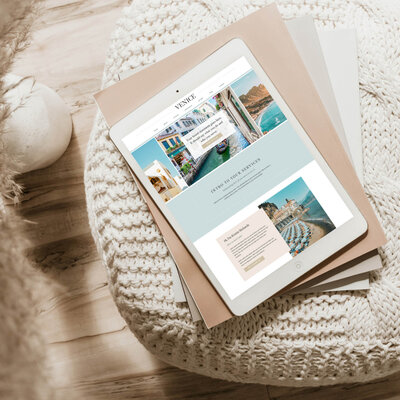


Working with a website designer is not instant, hands-off, or all-inclusive. It is a collaborative process that requires preparation, clear communication, and realistic expectations. When you understand how it actually works, you get a smoother experience and a much stronger final result.
You Cannot Start a Website Project Immediately (And That Is a Good Thing)
One of the biggest surprises for clients is timing.
Most designers are booked in advance, which means you likely will not start your project right away. This is completely normal and actually works in your favor.
A successful website project requires preparation before design even begins. That includes:
- Finalizing your offers and services
- Writing your website copy
- Gathering brand assets and images
- Possibly completing a photoshoot
Without these pieces, the design process slows down or stalls completely.
That wait time is not a delay. It is your preparation window. It gives you the space to get everything organized so your project runs smoothly once it begins.
If you are thinking about redesigning your site, this is the time to explore our design services and start planning ahead.
Designers Do Not Usually Write Your Website Copy
This is one of the most common misunderstandings.
Most website designers focus on design, not writing. Copywriting and design are two completely different skill sets.
Unless you are working with a full-service agency, you will be responsible for providing your website copy.
You have two options:
- Write it yourself
- Hire a professional copywriter
If writing feels overwhelming, hiring a copywriter is often worth the investment. It improves both the quality of your messaging and the efficiency of your project.
Strong messaging also makes the design process easier. Your designer can build around clear, complete content instead of waiting on missing pieces.
You Should Not Wait Until Everything Is Ready to Hire a Designer
It might feel logical to wait until your content and branding are complete before reaching out.
In reality, this often delays your launch.
Because most designers book in advance, waiting until everything is ready means you will still have to wait to get on their calendar.
A better approach is to reach out early, during the planning stage.
This allows you to:
- Secure your spot in the designer’s schedule
- Understand exactly what is required from you
- Work toward a clear timeline
It also helps you avoid guessing what you need. Every designer has a slightly different process, and knowing expectations early makes everything easier.
What Does “Working With a Designer” Actually Mean?
Let’s clarify this, because it is where many expectations fall apart.
Working with a designer is a collaborative process where:
- You provide the content, direction, and feedback
- The designer creates the visual experience and structure
It is not a fully hands-off service.
Even after the prep phase, you are still responsible for:
- Reviewing designs
- Providing feedback and approvals
- Supplying any missing content or details
If you are not actively involved, your project will slow down. In some cases, it can stall completely.
The best results happen when clients treat the project as a priority and make time for it.
Giving Feedback Is Not a Problem. It Is the Process.
Many clients hesitate to say they do not like something.
They worry about being difficult or offending the designer.
In reality, feedback is essential.
Your designer wants to know what feels off so they can adjust and refine the design. That is how you get to a final result you actually love.
Good feedback should be:
- Honest
- Clear
- Respectful
You do not need perfect design language. Even saying something feels “off” is helpful. A good designer will ask the right questions to guide revisions.
Without feedback, your website cannot improve. With it, the process becomes collaborative and far more effective.
Why Template-Based Websites Still Work
There is often an assumption that only custom websites deliver strong results.
That is not the case.
Template-based websites can be highly effective when paired with strong branding and messaging. They streamline the process, reduce costs, and still allow for a polished, professional result.
Most clients do not care whether your site is custom or template-based. They care about how it feels, how clear it is, and whether they trust you.
If you are looking for a faster, proven option, explore our travel website templates.
Key Takeaways
- Website projects require prep work before design begins
- Most designers do not provide copywriting services
- You should reach out to a designer before everything is ready
- Your involvement is essential for a successful project
- Honest feedback leads to better results, not worse
FAQs
How long does it take to start a website project with a designer?
Most designers are booked in advance, so there is usually a waiting period before your project begins. This can range from a few weeks to a couple of months. That time is meant for preparation, including writing your copy and organizing your content.
Do I need to hire a copywriter for my website?
It is not required, but it is highly recommended if it fits your budget. A copywriter can improve your messaging and make the design process smoother. If you choose to write your own content, be prepared to invest time in doing it well.
How involved do I need to be during the project?
You need to be actively involved. This includes providing content, reviewing designs, and giving feedback. The more responsive and engaged you are, the faster and more successful your project will be.

Want to stay in the loop for all future Align & Amplify Podcast episodes?!
CLICK HERE to subscribe on Apple Podcasts!