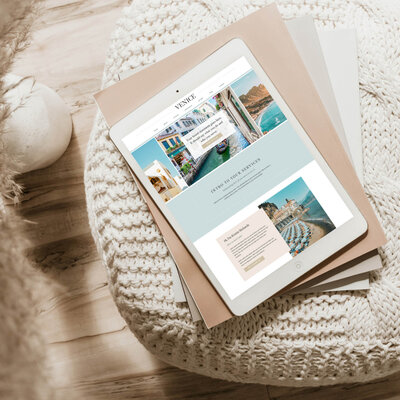


A high-converting website is one that moves visitors toward a clear next step. It removes friction, builds trust, and makes it easy for someone to say “yes” to working with you or staying connected.
It is not just about aesthetics. It is about how your design, content, and structure work together to guide decisions.
1. User Experience: The Foundation of Conversions
Before someone reads a word on your website, they are already forming an opinion based on how it looks and feels.
If your site is confusing, slow, or difficult to navigate, most people will leave before they even understand what you offer.
Here is what matters most:
Mobile optimization
Most of your visitors are viewing your site on their phone. Your website needs to not only “adjust” to mobile but actually feel easy to use on mobile. That means clean spacing, readable text, and buttons that work properly.
Fast loading speed
If your site takes too long to load, people will not wait. Large image or video files are one of the biggest causes of slow websites. Optimizing your visuals keeps your site fast without sacrificing quality.
Clear navigation
Your menu should be simple and intuitive. Visitors should immediately know where to click next without having to think.
If your website feels effortless to use, people stay longer. And when they stay longer, they are more likely to take action.
If you are unsure whether your current site delivers this experience, this is exactly what we refine inside our design services.
2. Website Copy That Builds Connection and Clarity
Design gets attention. Copy creates connection.
Your website messaging should speak directly to your ideal travel client. That means addressing their desires, their concerns, and what they actually want help with.
Here is what strong website copy looks like:
- Clear and specific, not vague
- Easy to understand, no industry jargon
- Written in a conversational tone
- Focused on the client, not just your services
A common mistake is either saying too little or overwhelming visitors with dense paragraphs.
In reality, most websites do not have too much content. They just are not structured in a way that is easy to read.
Break up your content. Make it skimmable. Guide the reader.
If your audience cannot quickly understand what you do and who you help, they will not take the next step.
3. Clear Calls to Action That Guide Every Page
Your website should never leave someone wondering what to do next.
Every page needs a clear, consistent call to action.
For most travel advisors, this is something like:
- Book a consultation
- Submit an inquiry form
- Start planning a trip
Your main call to action should be:
- Easy to find (especially in the top right corner of your site)
- Repeated throughout each page
- Clearly worded so there is no confusion
Avoid being overly creative with button text. Clarity always converts better than cleverness.
Instead of making people search for how to work with you, make it obvious and accessible at every step.
4. Email Marketing Integration: Capture Leads Who Are Not Ready Yet
Not every visitor is ready to book the first time they land on your site.
That does not mean they are not a great future client.
This is where email marketing becomes one of the most powerful conversion tools on your website.
Instead of losing those visitors, give them a reason to stay connected.
Examples include:
- A travel planning checklist
- A destination guide
- A quiz or personalized recommendation
Offering a free resource in exchange for an email address makes it much more likely someone will opt in.
Once they are on your list, you can build trust over time and stay top of mind until they are ready to book.
You can also connect your contact forms to your email system so inquiries are automatically added to your list. This allows you to continue nurturing leads even if they are not ready yet.
If you are building or redesigning your site, this is something we strategically incorporate in both our
our design services and travel website templates.
5. Design and Strategy Must Work Together
It is easy to focus heavily on design and overlook strategy.
But the highest-converting websites balance both.
Your visuals should:
- Create a strong first impression
- Reflect your brand and positioning
- Feel clean and professional
Your strategy should:
- Guide the user journey
- Communicate your value clearly
- Lead people toward action
When these two elements work together, your website becomes more than just a digital brochure. It becomes a tool that actively grows your business.
Key Takeaways
- A beautiful website is not enough. It needs to be easy to use and strategically built
- Mobile optimization and fast load times directly impact conversions
- Clear, conversational copy builds trust and helps visitors understand your value
- Strong calls to action should be visible and consistent across every page
- Email marketing helps you capture and nurture leads who are not ready yet
FAQs
How do I know if my website is not converting?
If you are getting traffic but very few inquiries or sign-ups, your website likely has a conversion issue. Common causes include unclear messaging, weak calls to action, or poor user experience. Reviewing how users move through your site can quickly highlight where people are dropping off.
What is the most important part of a high-converting website?
There is no single element. Conversions happen when design, messaging, and strategy work together. However, clear messaging and strong calls to action tend to have the biggest impact because they directly influence decisions.
Do I really need email marketing on my website?
If you want to maximize conversions, yes. Most visitors are not ready to book immediately. Email marketing gives you a way to stay connected and build trust over time so you are the first person they think of when they are ready.

Want to stay in the loop for all future Align & Amplify Podcast episodes?!
CLICK HERE to subscribe on Apple Podcasts!