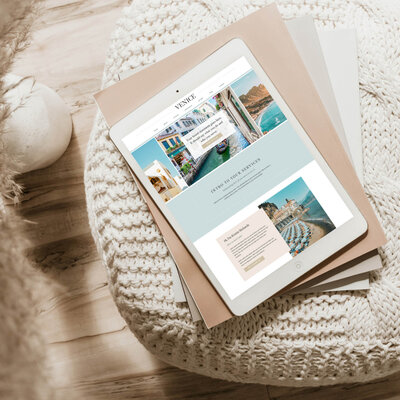


Your homepage is often the first impression potential clients have of your travel business. A well-designed homepage can immediately show visitors who you are, what you offer, and why they should work with you. If it’s confusing, outdated, or unclear, visitors will leave before you even have a chance to connect.
In this post, we’re breaking down the key do’s and don’ts for a travel website homepage. These tips will help you attract the right clients, showcase your value, and make it easy for people to take action—without getting overwhelmed.
Do: Be Clear About What You Do and Who It’s For
The first thing visitors need to know is who you serve and what you offer. Your homepage’s hero area—the section people see without scrolling—should clearly communicate your services and your ideal client.
Clarity beats clever taglines every time. You want people to immediately know if your business is a fit for them. If it’s not, that’s okay—they’ll leave, and you’ll save time focusing on the right audience.
Even if your brand has multiple services or travel packages, focus on the overarching theme. Let visitors quickly decide if your business is right for them.
Do: Capture Emails With Opt-Ins
Your homepage is the perfect place to start building relationships with potential clients. Offering a free resource, guide, or tips in exchange for email addresses helps you nurture leads over time.
Pop-ups often perform best, but also include on-page opt-ins so visitors can sign up as they scroll. Email marketing allows you to stay in touch, educate, and convert prospects into clients—without relying solely on social media or repeat visits.
For ideas on creating a high-converting freebie, check out our guide on traits of a well-crafted opt-in.
Do: Balance Your Writing Length
Homepage text should be concise but informative. Too little writing leaves visitors confused, while too much can overwhelm them.
Focus on giving enough detail to capture interest and lead them to internal pages where you can expand on your offerings. This makes the homepage scannable and approachable, encouraging visitors to explore your website further.
Do: Prioritize Key Actions
Decide what the most important action is for your visitors to take. Whether it’s filling out an inquiry form, booking a consultation, or downloading a free guide, make this action prominent and easy to complete.
If your homepage has multiple goals, rank them in order of importance. The top priority should be front and center, while secondary actions can appear further down the page. Avoid cluttering the homepage with less critical information, like blog posts, if it distracts from your main objectives.
Don’t: Make Text Hard to Read
Legibility is critical. Avoid overly fancy fonts, thin or small text, and poor color contrast. Text should be easy to read on both desktop and mobile devices.
Consider your ideal client and their comfort with reading online content. Many travel clients are adults who appreciate clear, readable text. If you place text over images, make sure there’s enough contrast for easy reading.
Don’t: Neglect Your Writing
Website copy is more than filler—it creates connection and communicates your value. Avoid minimal or rushed writing on your homepage and throughout your site.
Good writing explains what you do, addresses client needs, and guides visitors toward taking action. If writing feels overwhelming, hiring a copywriter can save time and improve your results, providing reusable content for your website, emails, and marketing materials.
Don’t: Make It Hard to Take Action
Your calls-to-action (CTAs) should be obvious and easy to find. Visitors shouldn’t have to scroll endlessly to complete an action.
Multiple opportunities to take action—like signing up for a free guide or booking a consultation—help keep visitors engaged and more likely to convert.
Don’t: Make the Homepage All About You
While it’s important to introduce yourself with a small bio and photo, the focus should be on your clients.
Visitors want to know how you can help them, not your life story. Use your homepage to speak directly to your ideal client, highlighting their needs and how your travel services solve them.
Practical Takeaways
- Clearly communicate what you offer and who it’s for above the fold.
- Include email opt-ins to start building client relationships.
- Keep homepage text concise but informative.
- Prioritize the most important actions for visitors to take.
- Ensure all text is legible with strong contrast and readable fonts.
- Looking for a professional website that converts? Check out our website our design services.
- Want a faster DIY launch? Explore our travel website templates.
FAQs
Q: How long should my homepage copy be?
A: Your homepage should be concise enough for quick scanning, but long enough to communicate your main offerings and lead visitors to internal pages for more details. Aim for clear, digestible sections rather than long paragraphs.
Q: Should I include multiple opt-ins on my homepage?
A: Yes. A combination of a pop-up and on-page opt-in is effective. This ensures visitors see your offer whether or not they interact with the pop-up.
Q: Can I use decorative fonts on my website?
A: Decorative fonts are fine for headings or accents, but body text should be easy to read. Prioritize legibility, especially for older audiences.
Learn more about me & the biz: https://inflowdesignco.com
Connect on Instagram: https://www.instagram.com/girlbossdesigner/
Want to stay in the loop for all future Create Your Destiny Podcast episodes?!
CLICK HERE to subscribe on Apple Podcasts!