

A smooth website design process comes down to three things: planning ahead, preparing your content and branding before you start, and choosing the right design style from the beginning. When you do these well, your website project feels clear, efficient, and actually enjoyable instead of overwhelming.
Why Website Projects Feel Chaotic (and How to Avoid It)
Most website projects don’t fall apart because of design. They stall because of missing pieces.
Common issues include:
- Starting before content is ready
- Rushing timelines
- Making design decisions without a clear direction
The result is a stop-and-start process that drags on for weeks or even months.
The fix is not complicated. It just requires doing the right work in the right order.
What Makes a Website Process “Smooth”?
A smooth website process is one where:
- You know your timeline and expectations
- All core assets are ready before design begins
- Decisions are made upfront, not mid-project
In simple terms, it means you are not trying to write, design, and figure out strategy all at once.
Instead, you separate those phases so each one gets your full attention.
1. Plan Ahead (Earlier Than You Think)
Planning ahead is the most overlooked step, but it sets the tone for everything.
If you are a travel advisor launching or redesigning your website, you need to think beyond “I want this done next month.”
You should be planning for:
- Designer availability (if hiring)
- Time to write your content
- Branding updates or photoshoots
- Tech setup like email marketing
When you plan ahead, you give yourself space to think clearly and make better decisions. When you don’t, everything feels rushed and reactive.
If you are considering working with a designer, this is also the time to explore your options and secure a spot.
2. Prep Your Content and Branding First
This is the step that makes or breaks your experience.
Before you touch a template or start working with a designer, you should have:
Your Website Copy Written
This includes:
- Home page
- Services page
- About page
- Any blog content or resources
Trying to write while designing splits your focus and slows everything down.
When your content is ready first, the design phase becomes faster and more creative.
Your Branding Defined
At minimum, you need:
- Logo
- Color palette
- Fonts
- Brand direction
For travel advisors, your branding should also reflect your niche. Luxury, family travel, adventure, or destination-specific services all require a different visual tone.
Without this clarity, your website will feel inconsistent.
Your Marketing Setup Considered
Think about:
- Email list or newsletter
- Lead magnets or freebies
- Blog strategy
Even if you are not launching everything immediately, having a plan avoids rework later.
3. Choose the Right Style From the Start
This is where many travel advisors unintentionally create friction.
If You’re Hiring a Designer
Do not choose based on convenience or referrals alone.
Instead, ask:
- Does their portfolio match the look I want?
- Do I actually like their design style?
If the answer is no, you will spend the entire project trying to “fix” something that was never aligned.
If You’re Using a Template
The same rule applies.
Choose a template that already feels close to your vision. Avoid picking something you plan to heavily redesign.
The closer the starting point, the smoother the process.
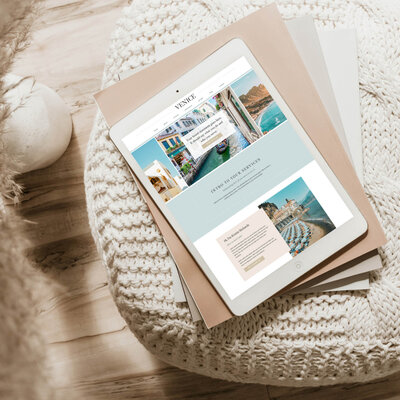
If you are exploring templates designed specifically for service-based businesses, start here.
Practical Takeaways
- Start planning your website earlier than your launch date
- Complete your website copy before starting design
- Have your branding fully defined upfront
- Think through your email marketing and lead generation
- Choose a designer or template that already matches your style
FAQ
How long should a website project take?
A well-prepared website project can take a few weeks to a couple of months. Delays usually happen when content or decisions are missing. If everything is ready before starting, the timeline becomes much more predictable.
Do I really need to write all my content first?
Yes. Even a strong draft is enough to start. Without it, the design process slows down and becomes less effective because you are trying to build pages without knowing what they need to say.
Should I hire a designer or use a template?
It depends on your budget and goals. Templates are a great option if you want a faster, more affordable solution. A designer is ideal if you want a fully custom experience and strategic guidance. Both can work well if you prepare properly.
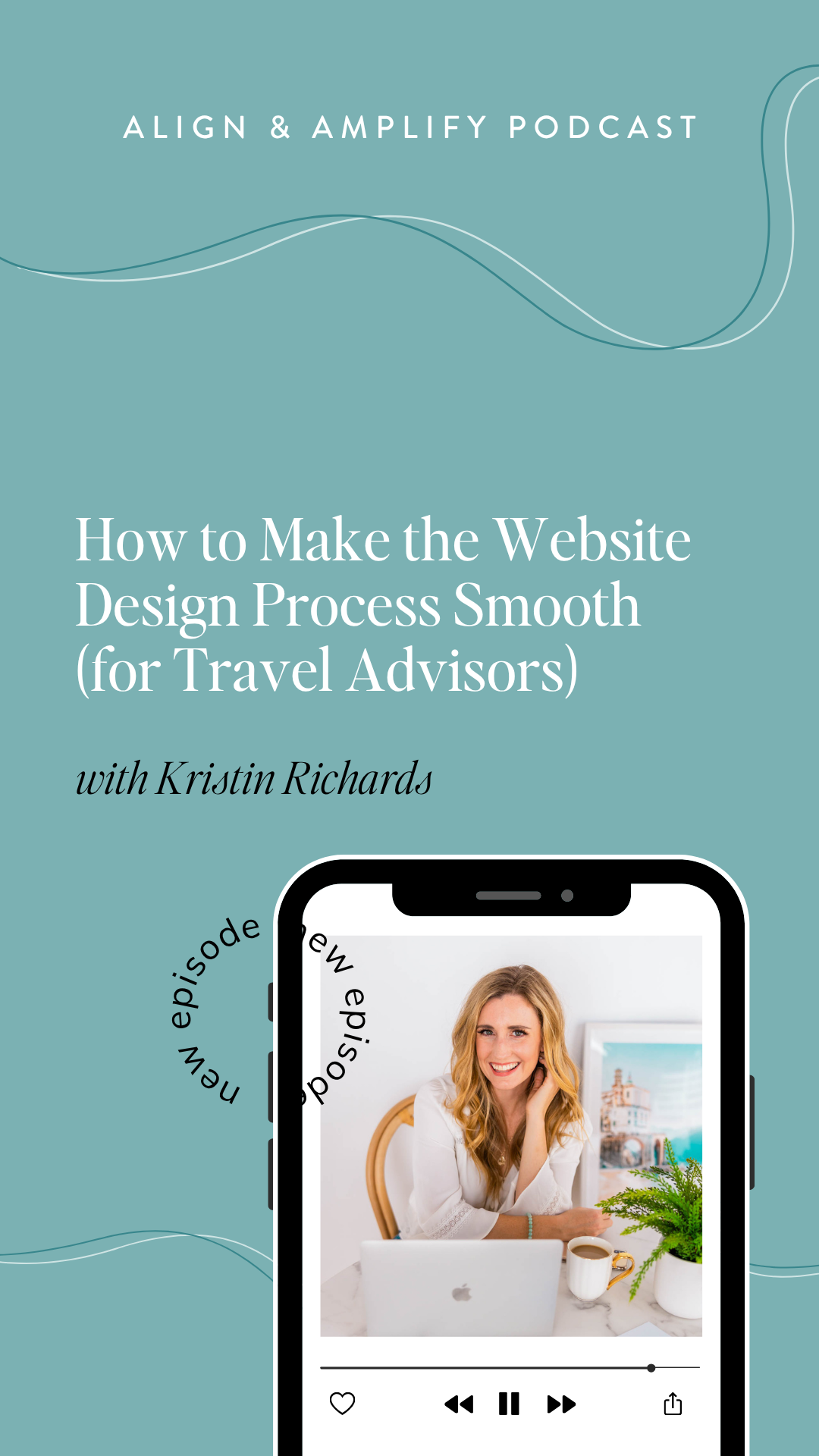
Want to stay in the loop for all future Align & Amplify Podcast episodes?!
CLICK HERE to subscribe on Apple Podcasts!