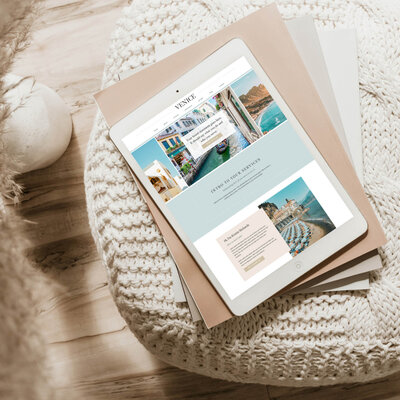


A travel advisor website gets more inquiries when it clearly communicates what you do, who you serve, and makes the next step obvious. Most websites struggle because their messaging is unclear, their structure is confusing, or they don’t guide visitors toward taking action.
If your travel advisor website isn’t generating consistent inquiries, there are usually two possible problems:
- Not enough people are reaching your website.
- The people who do visit aren’t converting.
Many advisors assume that once their website is live, inquiries should naturally follow. Others focus heavily on marketing and exposure but send traffic to a site that isn’t positioned to convert visitors into clients.
In reality, both sides matter.
Your website needs a steady flow of visitors, and once those visitors arrive, the experience needs to build trust and make the next step feel natural.
When either piece is missing, inquiries slow down.
The most common reasons travel advisor websites struggle to generate inquiries—and what to shift.
1. Not Enough People Are Reaching Your Website
One of the biggest misconceptions about websites is that once they’re live, they’ll start generating inquiries on their own.
But a website doesn’t create traffic simply by existing.
That’s like opening a beautiful boutique on a quiet street and assuming customers will magically find their way inside.
People need reasons to land on your site. That might happen through:
- Sharing helpful resources on social media
- Blog posts that answer common travel questions
- Articles that appear in search results or AI responses
- Guides or insights that others want to reference and share
Your website should act as the hub of your expertise, not just a digital brochure.
This is where ongoing content—especially blog content—can play an important role. It gives you something valuable to share online that isn’t always directing people straight to your services page. Instead, it invites people into your world through helpful information.
Over time, these entry points bring more visitors to your website and create more opportunities for inquiries.
Without consistent exposure, even the most thoughtfully designed website will struggle to generate leads.
2. Visitors Don’t Immediately Understand What You Do — or Why It Matters
Once someone arrives on your website, they’re subconsciously asking a few quick questions:
- What does this advisor specialize in?
- Is this someone who works with travelers like me?
- Why should I work with them?
If the answers aren’t immediately clear, visitors hesitate.
Many travel advisor websites rely on broad messaging such as: “We design personalized travel experiences around the world.” While accurate, that statement could apply to almost any advisor.
Strong positioning clarifies:
- Who you serve
- What kind of travel you specialize in
- The level of experience you design
- What makes your approach distinct
It also shifts the focus from simply describing destinations to communicating the value you bring to the planning process.
Clients aren’t hiring you because you can suggest a hotel in Italy. They’re hiring you because of the insight, access, relationships, and expertise you bring to their trip.
When positioning and messaging are clear, visitors feel confident that they’ve found the right person to work with.
And confidence leads to inquiries.
3. The Design Doesn’t Reflect the Level You Want to Attract
Design communicates credibility within seconds.
Before someone reads a single sentence on your site, they’re already forming an impression about professionalism, attention to detail, and overall quality.
If a website feels:
- visually inconsistent
- cluttered
- outdated
- overly DIY
it can quietly undermine trust.
Clients investing in custom travel planning expect a certain level of polish and refinement. Your website design should reflect the caliber of experience you provide.
This doesn’t mean following every design trend. Instead, it means creating a site that feels cohesive, intentional, and aligned with the type of client you want to attract.
At In Flow Design Co., we approach travel advisor website design as a positioning tool—not just a visual refresh. Design, messaging, and structure all work together to signal expertise and professionalism.
When those elements align, the entire experience feels more trustworthy.
4. The Mobile Experience Creates Friction
A significant portion of your website visitors are viewing your site on their phone.
If the mobile experience feels frustrating or difficult to navigate, visitors rarely stay long enough to take the next step.
Common mobile issues include:
- Dense blocks of text that are hard to scan
- Awkward gaps between content
- Layouts that feel cramped on smaller screens
- Text is too large or small for mobile view
- Inquiry forms that feel cumbersome to complete
- Important information buried too far down the page
Even small friction points can interrupt momentum.
A well-designed travel advisor website considers the mobile experience intentionally—ensuring that scrolling, reading, and submitting an inquiry all feel smooth and effortless.
When the mobile experience works well, visitors are far more likely to stay engaged.
5. You’re Missing Opportunities to Capture Future Clients
Not everyone who lands on your website is ready to plan a trip immediately.
Some visitors are researching.
Some are gathering ideas for a future trip.
Some are simply discovering you for the first time.
If the only action available on your site is “start planning your trip,” you may lose the opportunity to stay connected with those visitors.
Strategic lead capture gives them another way to engage with you.
That might include:
- a helpful travel planning guide
- a curated destination resource
- thoughtful blog content that answers common questions
These resources allow visitors to continue learning from you until they’re ready to move forward.
Over time, many of those relationships turn into inquiries.
Traffic and Conversion Work Together
If traffic brings people through the door, the website experience determines whether they stay.
Driving traffic to a website that isn’t clearly positioned or easy to navigate is like inviting a crowd into your boutique… only for them to walk in, feel unsure where to start, and quietly leave.
Inquiries happen when both pieces work together.
People discover your website.
And once they arrive, the experience builds trust and makes the next step feel natural.
When positioning is clear, design feels professional, and the site is easy to navigate, your website becomes more than an online presence.
It becomes a quiet client attractor that supports your business in the background.
If You’re Rethinking Your Travel Advisor Website:
If your current website feels slightly misaligned… Or you’re building your first strategic travel advisor website and want to approach it correctly from the beginning…
At In Flow Design Co., we specialize in strategic travel advisor website design — blending positioning, structure, and elevated branding to help advisors attract higher-level clients.
For those ready for a fully guided experience, our website design services focus on long-term authority and conversion.
For those not ready for full service, our Showit website templates provide a professionally structured foundation built specifically for travel advisors.
The goal isn’t more design.
It’s better strategy.
And when that foundation is strong, everything else compounds.
Frequently Asked Questions
Why isn’t my travel advisor website getting inquiries?
Most travel advisor websites don’t get inquiries because they lack either traffic or clarity. In many cases, the issue isn’t just how many people are visiting the site, but how clearly the website communicates what the advisor does, who they serve, and how to get started. Weak messaging, unclear positioning, and a confusing user experience can all prevent visitors from taking the next step.
How do I get more inquiries from my travel advisor website?
A travel advisor website generates more inquiries when it combines consistent traffic with clear positioning, strong messaging, and a user experience that makes the next step obvious. Visitors should quickly understand what you offer, who you serve, and how to inquire. When those elements are in place, your website becomes a tool that supports your marketing and turns visitors into leads.
Do travel advisors need a blog to get more website traffic?
Blog content helps travel advisors increase visibility by creating more opportunities to be discovered through search engines and AI tools. It allows you to answer common travel planning questions, showcase your expertise, and attract potential clients who are still in the research phase. Over time, this builds authority and brings more qualified traffic to your website.
Can a travel advisor website actually generate clients?
Yes, a travel advisor website can bring in clients when it is structured strategically. A strong website helps position your expertise, build trust with potential clients, and guide them toward taking the next step. While traffic still plays a role, a well-structured website ensures that the visitors you do get are more likely to convert into inquiries.
Want to stay in the loop for all future Align & Amplify Podcast episodes?!
CLICK HERE to subscribe on Apple Podcasts!