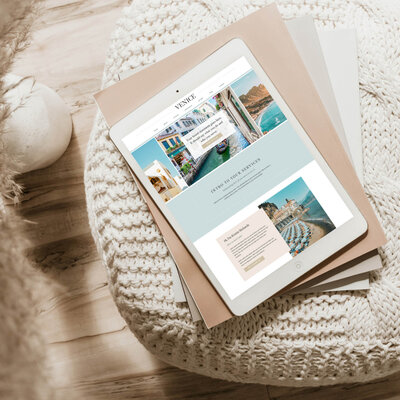


Your brand colors are not just aesthetic choices. They directly influence how your audience feels about your business within seconds. The right colors can build trust, communicate your value, and attract the kind of travel clients you actually want to work with.
What Is Color Psychology in Branding?
Color psychology is the idea that different colors trigger specific emotions and perceptions. In branding, this means your color palette shapes how people experience your business before they even read a single word.
For travel advisors, this matters even more. You are selling experiences, emotions, and trust. Your colors should reflect the feeling of working with you, not just what looks nice.
A calm, elevated palette signals ease and expertise. A bright, high-energy palette signals excitement and fun. Neither is wrong. It depends on the experience you want to create.
Why Your Brand Colors Matter More Than You Think
When someone lands on your website or Instagram, color is one of the first things they notice. It sets the tone instantly.
Before they read your services or understand your offers, they are already forming an impression.
This is especially important if you:
- Sell high-touch, custom travel experiences
- Want to position yourself as premium or luxury
- Are trying to stand out in a crowded market
Your colors can either reinforce your positioning or quietly work against it.
If your brand feels chaotic, overly bright, or inconsistent, it can create doubt. If it feels cohesive and intentional, it builds confidence.
How to Choose Brand Colors Based on Feeling (Not Preference)
One of the most common mistakes is choosing colors based on personal preference alone.
Yes, you should like your brand. But your colors need to resonate with your ideal client first.
Start here instead:
Ask yourself:
How do I want my clients to feel when they land on my website?
Examples:
- Calm and taken care of
- Inspired and excited
- Confident in investing
- Relaxed and stress-free
Then choose colors that support that feeling.
A quick guide to common color meanings:
- Blue: trust, calm, reliability
- Green: growth, balance, nature, wealth
- Yellow: warmth, optimism, friendliness
- Orange/Coral: energy, confidence, approachability
- Red: passion, power, urgency
- Pink: softness, femininity, nurturing
- Purple: luxury, creativity, spirituality
- Neutrals (beige, taupe, white): simplicity, elegance, calm
- Black: sophistication, power, timelessness
Keep in mind: shade matters. A soft dusty blue feels very different from a bright electric blue.
Personal Brand vs Business Brand: What Changes?
If your travel business is built around you (your face, your voice, your personality), your preferences matter more.
Your brand should feel aligned with who you are. Clients are choosing you, not just your services.
But if your brand is more of a company or agency, your personal taste matters less.
In that case, your color decisions should be driven almost entirely by:
- Your ideal client
- The experience you are selling
- Your positioning (luxury, mid-range, budget)
The further your brand moves away from being personal, the more strategic your color choices need to be.
How Pricing and Positioning Affect Your Color Palette
Your pricing and brand positioning should influence how much color you use.
Luxury or high-end travel brands:
- Tend to use more neutrals
- Use color sparingly
- Focus on contrast, simplicity, and space
- Avoid overly bright or saturated palettes
Mid-range or flexible brands:
- Have more freedom with color
- Can incorporate more personality and variation
Fun, family, or adventure-focused brands:
- Can lean into brighter, more playful palettes
- Often use higher contrast and more color combinations
If you are positioning yourself as a premium travel advisor, simplifying your color palette is often a smart move.
How to Build a Strategic Brand Color Palette
A strong brand palette is not just one or two colors. It is a system.
At minimum, you need a mix of:
- Dark color for text and contrast
- Mid-tone colors for brand personality
- Light colors for backgrounds and breathing space
This ensures your website is readable and visually balanced.
If everything is light, nothing stands out.
If everything is dark, it feels heavy and hard to read.
You need contrast to create hierarchy and clarity.
Most brands work well with 3 to 6 colors, including neutrals.
Practical Takeaways
- Choose colors based on how you want clients to feel, not just what you like
- Keep your ideal client and brand positioning front and center
- Use fewer, more intentional colors if you want a high-end feel
- Make sure your palette includes light, medium, and dark tones
- Test your colors on your website, not just in isolation
Where This Fits Into Your Website Strategy
Your colors are not just a branding decision. They directly impact how your website performs.
They influence:
- First impressions
- Readability
- Emotional connection
- Conversion behavior
If your site is not converting, your visual foundation may be part of the problem.
If you are planning a redesign, this is something we address inside our design services.
If you want a faster, done-for-you starting point, our travel website templates are built with strategic color systems already in place.
FAQs
How many colors should a travel brand have?
Most travel brands work best with 3 to 6 colors. This usually includes a mix of neutrals, one or two primary colors, and a few supporting tones. The goal is flexibility without overwhelm. Too many colors can make your brand feel inconsistent.
Can I use my favorite color in my brand?
Yes, especially if you are building a personal brand. But it should still align with the feeling you want to create for your audience. If your favorite color clashes with your positioning or ideal client, it is worth adjusting the shade or how it is used.
Do luxury travel brands always use neutral colors?
Not always, but they tend to use color more intentionally and sparingly. You will often see neutrals paired with one refined accent color. The overall look feels calm, elevated, and cohesive rather than loud or overly playful.
Want to stay in the loop for all future Align & Amplify Podcast episodes?!
CLICK HERE to subscribe on Apple Podcasts!